A traditional folkloric parade held on the Monday of Carnival (this celebration takes place in La Paz and showcases diverse regional and indigenous dances).
A traditional Bolivian Carnival character who wears a brightly colored, one-piece costume and a mask. (Representing mischief and joy, EL PEPINO is a central figure in the festivities of La Paz, where the character is symbolically buried at the end of the season).
We have to get the EL PEPINO costume out because Carnival is almost here.
A festive group of musicians and revelers that accompanies carnival queens and other figures during a parade (in Panama, these groups represent rival neighborhoods and compete for the best performance).
A: The thing I like most about carnival are the tunas. B: Right? They are quite a show.
A water balloon used to play during Carnival celebrations. The goal is to throw them at people to soak them. A bombucha is a larger version of standard small water balloons (in Argentina, it is a tradition to have water fights in the street during the summer Carnival).
I bought some bombuchas at the kiosk so we can play Carnival.
A town in Bolivar state, Venezuela, known for its rich gold deposits and its famous annual Carnival, which is a major event celebrated for its unique music and cultural heritage.
The calypso music played at the El Callao carnival is so catchy!
The signature, rhythmic dancing style performed by carnival queens (Panamanian carnival involves a rivalry between two street factions, each led by a queen who performs these specific movements).
'Look at her parapapeo' | 'Oh, but she does not know how to parapapear'.
A high-energy Dominican musical genre and dance style featuring fast-paced, marching band style percussion and heavy brass. It is the signature sound of the country's Carnival celebrations (Dominican Carnival takes place throughout February).
It is not even February, why are you dancing Alibabá?
A term for the Diablo Cojuelo, the central masked devil character of Dominican carnivals. It is a shortened form of the word for a masked person. (The Diablo Cojuelo is the most iconic figure of Dominican Carnival, known for wearing elaborate horned masks and colorful costumes).
Here come the mácaro, run for it! What are we celebrating on February 27? The day of the mácaros.
A guy in the Dominican carnival who covers himself in burnt engine grease to represent African ancestors, participating in parades where they dance or scare kids. (These characters often demand small tips from onlookers, threatening to stain them with grease if they do not pay).
The tiznao asked me for 20 pesos and since I didn't give them to him, he smeared my arm.
The name of a major carnival troupe of diablos cojuelos from the city of Bonao, known for its large size and significant wealth. (Diablos cojuelos are the central masked characters of Dominican Carnival who parade in elaborate costumes).
-Who are you marching with this year? -With the Pililos, those guys are part of the cool crew!
A carnaval is a public festival held right before Christian Lent. The dates vary from late January to early March depending on the year, and it combines elements like costumes, parades, and street parties (In the Dominican Republic, the main celebration usually coincides with Independence Day on February 27).
By extension, similar parties held at any time of year are also called a carnaval. Despite the huge differences in how it is celebrated around the world, the common trait is that it is a period of indulgence and a bit of chaos.


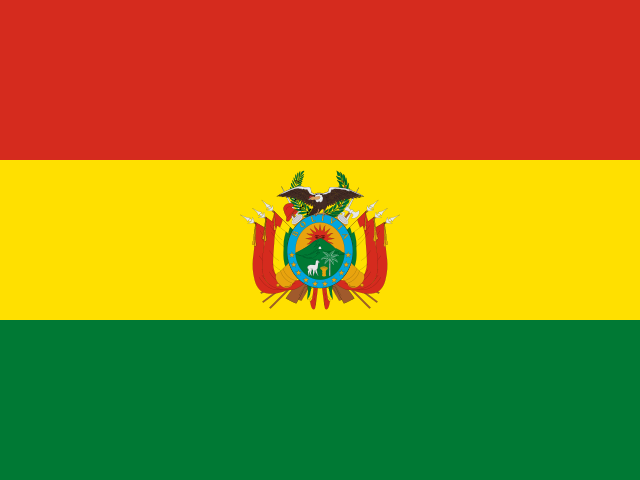 Bolivia
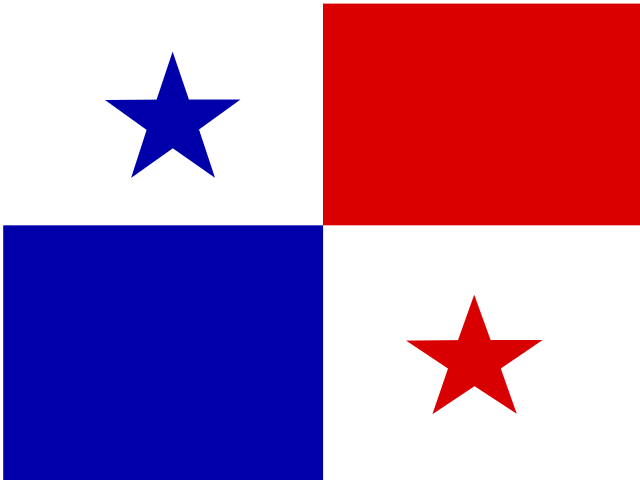 Panamá
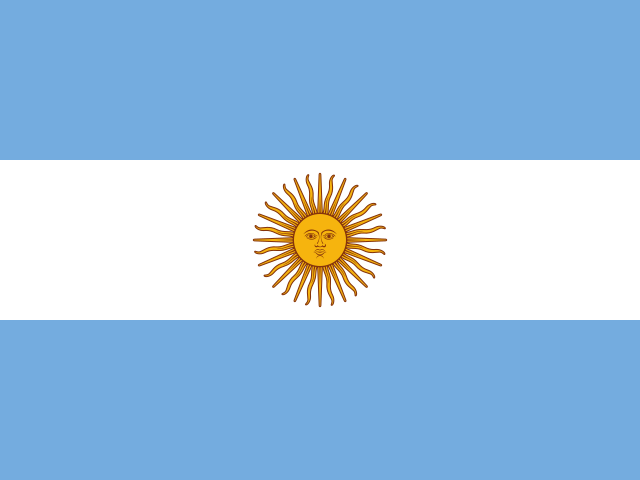 Argentina
 Venezuela
 República Dominicana