A highly vulgar insult targeting someone through a derogatory reference to their mother's genitals. It is typically used in moments of intense rage or during confrontations to verbally attack another person. (In Ecuador, chucha is a coarse term for the vagina).
Chucha tu madre, stop annoying me: I am not in the mood for your jokes today!
The standard name in Ecuador for a common sweet banana. It is usually eaten raw as a snack or used in shakes and desserts. (In Ecuador, guineo is specifically the sweet fruit eaten fresh, while platano typically refers to plantains used for cooking).
Pass me a guineo from that bunch for a snack, they are really ripe and sweet.
Acronym for the vulgar phrase ni puta idea (not a fucking clue), used to express total ignorance about a topic or situation. It is a blunt and very informal way to say you have no information whatsoever.
Hey, do you know where your brother left the keys? To be honest, n.p.i., look for him in his room.
A term for a blackout or power outage that leaves homes or businesses without electricity. In Ecuador, an apagon is common during grid failures or scheduled energy rationing (often due to droughts affecting hydroelectric power).
With this three-hour apagon, everything I have in the fridge is going to defrost.
Refers to an extremely stingy person who avoids spending money or sharing at all costs. This is the individual who always shrinks away or makes excuses when it is time to chip in for the bill or buy something for the group.
That guy is so agarrado that he would rather walk twenty blocks under the sun than pay a dollar for the bus fare.
An exclamation used in Ecuador to express an immediate feeling of nausea or repulsion. It is mainly used when encountering something extremely dirty, smelly, or visually disgusting.
Puchi, get that rag off the table, it smells totally musty!
Refers to a cynical attitude and a total lack of shame when acting in an opportunistic way. It is the sheer nerve or boldness to ask for favors or dodge responsibilities without feeling any remorse.
You have so much concha, coming to ask me for more money when you still owe me for last month!
Used to describe something excellent, high-quality, or looking flawless. It is a way to say a situation or object is great and has no faults.
For real, that design turned out nítido, it shows you put in the work. (The phrase 'la plena' is an Ecuadorian expression meaning 'honestly' or 'for real').
A term for a slacker or someone who avoids work and any activity requiring effort, preferring to stay idle. It is a common way to describe someone who refuses to help or lacks interest in their responsibilities.
That guy is a top-tier ocioso, he would rather spend all day hanging out on the corner than look for a real job.
A colloquial and sometimes derogatory term used in Ecuador to refer to a National Police officer. It is the most common street term for any uniformed member of law enforcement.
Watch your speed, there is a paco with a radar gun up ahead!
A type of rustic, handmade sandal or basic footwear, usually made from leather or rubber. These are simple, sturdy shoes used by rural workers for daily tasks in the fields.
We had to buy some new quimbas to walk through the muddy path without ruining our dress shoes.
A slang term used for a dark-skinned or Black person. It is a common way to describe someone by their complexion in everyday Ecuadorian speech. (In many Latin American cultures, referring to people by physical traits like skin color is a common way to identify or nickname them and is not always intended as an insult, though it depends heavily on context.)
That prieto kid playing forward is the best goal scorer the team has had in years.
Refers to a strong, pungent armpit stench caused by heavy sweating or a lack of deodorant. It is a very common way in everyday speech to describe someone who has bad body odor.
Hey, tell your cousin to shower or put something on, because he has a grajo that is unbearable.
The absolute nerve or shamelessness shown by someone who should be embarrassed but instead acts with bold audacity. It describes the cheekiness of someone who just does not care how their behavior looks to others.
Seriously, the cachaza on this guy: he has owed me money for months and today he asks me to buy him a beer!
An interjection used to express strong amazement or annoyance. It is a signature filler phrase used by people from the Carchi province (a region in northern Ecuador bordering Colombia). It signals that something has caused a deep impression, whether it is impressive or very irritating.
A la gran Caballo, I cannot believe he finished all the food in a second!
Adjective used to describe situations, objects, or events that are boring, of poor quality, or lack any charm. It is also used to label a disappointing or unfortunate occurrence.
How turro that the concert was canceled at the last minute when we already had the tickets bought.
A popular Ecuadorian expression used to insinuate or assert that a man is gay. It is commonly used in informal conversations to mock someone who, according to the speaker, is revealing his true sexual orientation. (The literal meaning is his canoe is getting wet).
Stop acting like that in front of your friends, or they will think that se te está mojando la canoa.
An Ecuadorian term used to describe something impressive, excellent, or of superior quality. It also refers to a person who is very brave, determined, or shows great skill. (In Ecuador this is generally a positive term meaning badass, unlike in other countries where it often means horny or angry.)
That play you made at the end of the game was really arrecha, nobody expected that goal.
A slang term for fear, cowardice, or intense nervousness in a risky situation. It is that gut feeling of being chicken that stops you when you are facing something scary. (The word comes from 'culo', referring to a physical reaction of fear).
My cousin got totally culillo about jumping off the bridge to bungee jump.
Refers to instant justice that hits someone after they act spitefully or mock others. It is basically fate settling the score by giving you a taste of your own medicine.
Bryan was laughing at me because I ended up in a makeup exam, and now it turns out he flunked the final too: that is what he gets for pure karma.
A term used in the Ecuadorian highlands (the Sierra region) to refer to one's mother or the female head of the household. It is a popular variation denoting closeness and is distinguished from standard Spanish by its stress on the first syllable (MA ma).
La mama says not to forget to buy the bread before you come.
Used to describe something of very poor quality, crappy, or a complete disaster. It is a common expression for things that fail to meet expectations or are just a piece of junk.
I downloaded that app thinking it would be good, but it is a total chusco: it doesn't even open the main menu.
A very common informal term used throughout Ecuador to refer to a house or place of residence. It is the standard slang for home when speaking with friends or relatives.
Hey, are we heading to your caleta to watch the movie or would you rather stay here?
A casual partner or hookup with whom someone has an informal romantic or sexual relationship without being officially in a relationship. It is the person someone sees for intimacy when there is trust but no commitment.
Did you see Carlos? He showed up at the party with a new agarre and they spent the whole night together.
An expression used to voice annoyance, anger, or frustration when things go wrong or an irritating problem arises. It is often used to show indignation toward an unexpected mess or trouble. (In Ecuador, the word vaina is a common, informal way to refer to a thing, a problem, or a nuisance).
que vaina with this traffic, I am already way too late for the meeting!
A slowpoke driver who holds up traffic by driving at a snail's pace. It also describes a naive or gullible person who is easy to cheat in business or everyday life.
Hurry up a bit, you are going real pato and we already have a long line of cars behind us.
A gatecrasher or someone who barges into a conversation without an invitation, often acting in a nosy or mooching way. It refers to the person who shows up at a party or gathering uninvited specifically to take advantage of the situation.
That guy always shows up at birthday parties without anyone giving him the address, he is a total colado.
Used to describe a person who never stops talking and always has something to say. It is a term for a total chatterbox who can talk for hours without getting tired (literally refers to a parrot).
My neighbor is a real cotorra, she kept me standing at the door for half an hour telling me everyone's business in the neighborhood!
Used to describe a malicious or opportunistic person who acts dishonestly to take advantage of others. It refers to a treacherous individual who cannot be trusted.
Watch out for that guy because he is a complete RATA, he told me he was going to help me with the paperwork and all he did was keep my money.
A person's exaggeratedly slow pace or excessive calmness when walking or doing something. It is used when someone is dawdling or taking their sweet time in a way that tests others' patience.
Pick up the pace, because with that prosa we will never get to the stadium!
An informal and very common way to refer to a person's face. It is used especially when someone receives a blow, impact, or hit directly to that part of the body.
Watch out for that ball, it almost smashed your careta!
Refers to a state of intense sexual arousal or horniness, often at a party, which makes a person want to hook up with anyone. It can also describe someone who is extremely restless or has a sudden burst of hyperactive energy.
That guy has all the toche on him and is trying to hit on anyone he crosses paths with at the club.
Describes someone who is very self-confident and does not get embarrassed when acting or speaking in public. It refers to a bold person who stands out for their poise and is not easily intimidated in tough situations.
That kid is so canchero, he got up on the stage and gave the speech without practicing at all. (Pelado is a common term for kid or guy in Ecuador)
A traditional, very stretchy candy made by boiling panela (unrefined cane sugar) until it reaches a chewy, taffy-like texture. It is very common in the Andean regions, particularly in the town of Baños, where artisans manually stretch the hot sugar paste on wooden hooks.
Remember to buy some white melcochas when you pass through the Ambato bus terminal.
A slang term for a soldier or a member of the armed forces. While used frequently in daily conversation, it carries an informal or sometimes derogatory tone depending on the political climate.
Yesterday, several trucks full of milicos passed by, heading straight to the border because of the emergency.
Used to describe a person who lacks street smarts, is naive, or acts clumsy. It is the go-to term for someone who is easily fooled or simply oblivious to what is happening around them.
Hey, you are such a mamey, you let them charge you double for that taxi ride.


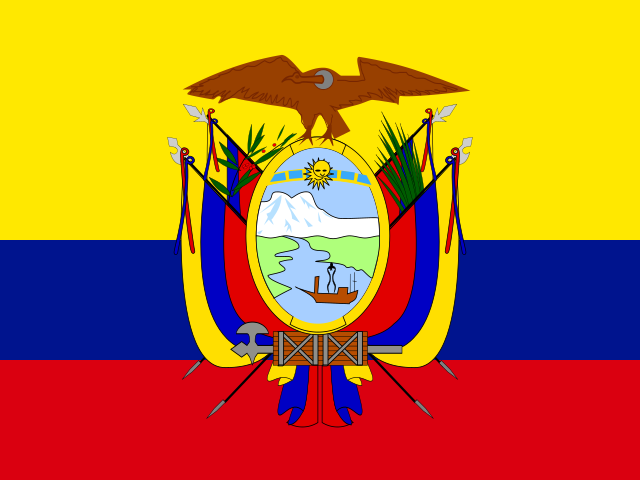 Ecuador