A nickname for the city of La Paz, referring to its location in a deep, bowl-shaped valley surrounded by high mountains (the name literally means the basin or the hollow).
A nickname used by proud residents of La Paz, known as paceños, to refer to their city (the name refers to its 2014 selection as one of the New7Wonders Cities).
A type of armadillo native to the Oruro region. The word is also used as a nickname for people born in that city (Oruro is a high-altitude city in Bolivia famous for its carnival and folklore).
A nickname for the city of Santa Cruz de la Sierra, referring to its urban layout organized by concentric ring roads (these circular avenues, known as rings, radiate out from the city center and define the city's geography).
Today I am catching a flight to the CIUDAD DE LOS ANILLOS.
A crude or unrefined action attributed to people from the rural interior, who are pejoratively called cholos. It implies a lack of city manners, education, or common sense. (In Panama, urban dwellers use this term to mock behavior they consider backward or provincial).
A: Look at that lady crossing all four lanes of the highway on foot. B: What a cholada, dude. Then she gets run over and it is your fault.
One of the Southern Towns (a group of remote Andean villages known as Pueblos del Sur) in the state of Merida, Venezuela. Founded in 1676 as an indigenous reservation, it sits on a plateau 1,510 meters above sea level. The local economy relies on coffee farming, handmade crafts, and tourism.
Let's go to the festivals of the Holy Child in Chacantá
A town in the state of Mérida that serves as a trade hub for farmers from neighboring villages to deal and sell their crops. It is a well-known lookout point offering views of the surrounding states and the Colombian border. The name refers to the traps early settlers used to kill the jaguars (locally called tigers) that were preying on their livestock.
Known as the Balcony of the Andes, this forested town in Merida state is located about 75 km from the state capital. Its name comes from the bluish tint the area takes on when viewed from neighboring Zulia state. It is also called the Ecological Town of the Americas due to its well-preserved forests and rich biodiversity. Located at 1,150 meters above sea level, its local economy relies on trade, farming, and handmade crafts.
Also known by locals as Mocuño, this is a historic farming and tourist town in the Andean mountains of Mérida state. It is one of the Pueblos del Sur (a group of traditional villages in the southern Merida highlands). It is a small, forested town characterized by its colonial architecture.
A town in the Mocoties Valley of Merida State, located at an altitude of 1,744 meters. Its economy is based on trade, agriculture, and tourism. The name originates from the way the local indigenous people fought as if they were dancing (the name literally means Dancers). The India Caru waterfall is one of the most popular destinations in the area.
A river that flows through the cities of Merida and El Vigia and empties into Lake Maracaibo. It is vital to western Venezuela due to its importance for the plantain-growing regions.
Damn dude, the Chama swelled up and flooded my farm last night. / The Chama is rushing at full speed full of mud.
A coastal city right next to Caracas where the main international airport is located (it is the closest seaside destination for residents of the capital, making it synonymous with going to the beach).
Let's head to the beach in La Guaira. There are plenty of seaside clubs in La Guaira.
A district located to the west of Panama City. According to local lore, the name is a phonetic version of the English phrase 'at right hand' used by Americans when giving directions (Arraiján is a major residential suburb for many people who work in the capital).
'They sell the best churros in Arraiján' : 'Let me know when you get to Arraiján'
An expression used when two or more people realize they are from the same town or region. It is used to identify someone as a fellow countryman. (Guarico is a state in central Venezuela, and Valle de la Pascua is a city within that state).
'Somos los mismos, I am also from Guarico.' 'Hey, but I also grew up in Valle de la Pascua, somos los mismos.'
The third largest city in the Dominican Republic. The name comes from the traditional sugar industry, where a romana is a type of scale used to weigh sugar cane.
I used to pass through La Romana when I was going to Bavaro and Punta Cana.
A common abbreviation for Santiago de los Caballeros, the second largest city in the Dominican Republic (located in the central Cibao valley, it is famously known as the heart city).
The main city in Switzerland, with a population of 404,783 inhabitants as of 2014 and a metropolitan area of 1,392,396. It is the capital of the canton of zurich and is located in the district of zurich, on the Swiss central plateau near the Alps.
A mocking way to refer to a common misspelling of the word país (country). Saying someone lives in Narnia for spelling it this way implies they are extremely ignorant, poorly educated, or out of touch with reality.
-My paiz of origin is Holland. -You moron, in Spanish it is spelled país.
A slang nickname for the town of Cotui. It is used jokingly or to avoid being identified as a native of the Cibao region, where the local accent is famous for substituting consonants with an i sound. By using an r instead, speakers parody or distance themselves from that regional stereotype. (Cotui is a city in the Sanchez Ramirez province).
A slang expression used to describe the Dominican countryside, rural provinces, or any underdeveloped area lacking modern urban infrastructure. (Used mainly by residents of the capital to dismiss anywhere outside the city).
The capital is the capital, and everything else is monte y culebra.
A bustling intersection with heavy commercial activity and transit hubs where major routes converge. In local neighborhoods, it describes corners prone to fights and tension, usually near a colmadon (a neighborhood grocery store that serves as a bar). In baseball, it is the nickname for third base due to the speed of hits sent to that area.
The Esquina Caliente of Herrera. Duarte and Paris (a famously hectic commercial and transit hub in Santo Domingo).


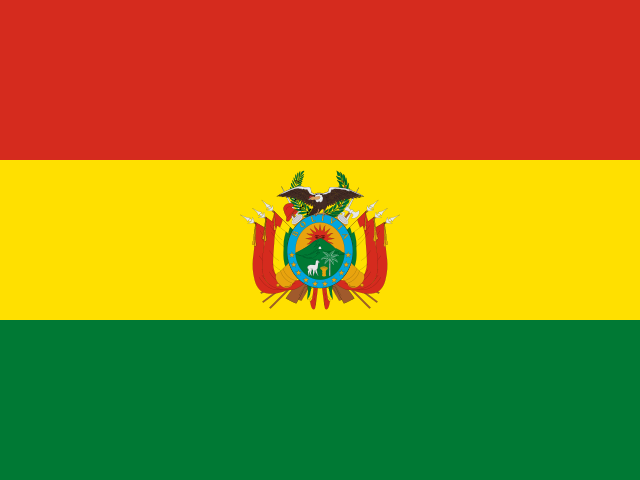 Bolivia
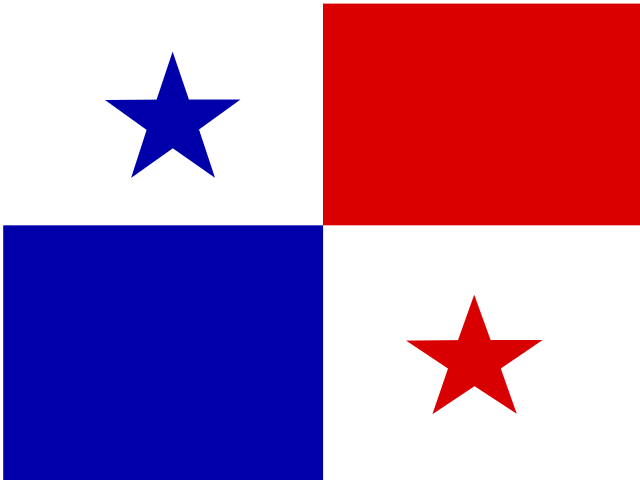 Panamá
 Venezuela
 República Dominicana
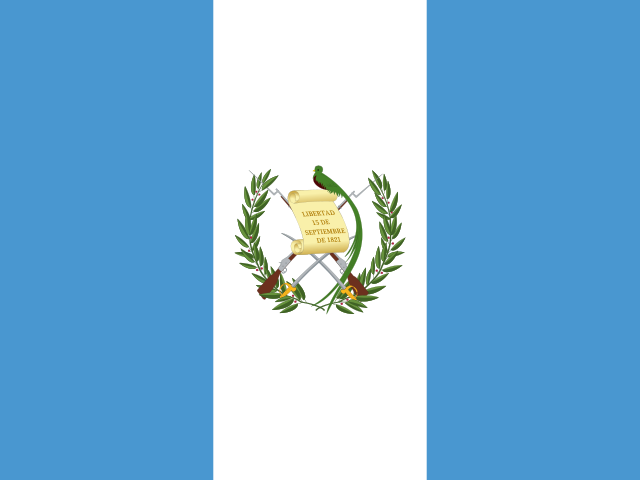 Guatemala
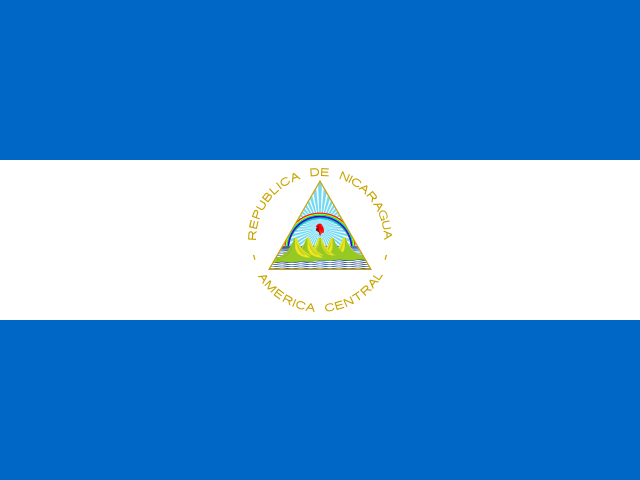 Nicaragua
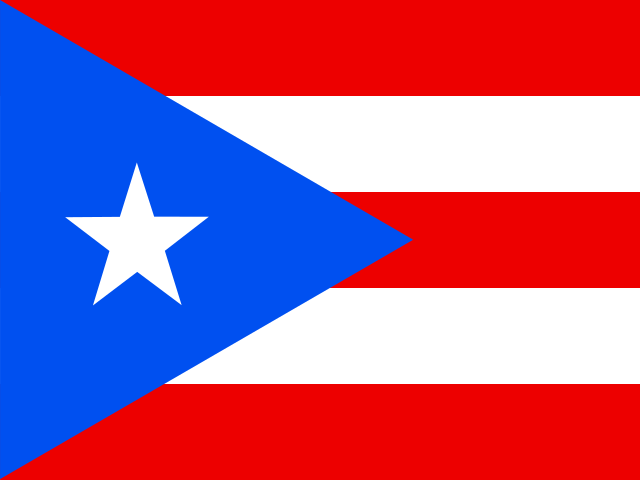 Puerto Rico