Slang that originated in the Rio de la Plata region at the end of the 19th and beginning of the 20th centuries. It is generally associated with tango lyrics (the Rio de la Plata is the estuary area including Buenos Aires and Montevideo).
Argentines speak in Lunfardo without even realizing it.
To speak in a mix of northern Dominican dialect and Spanglish. It is like the Dominican York style, referring to Dominicans influenced by New York culture, but featuring the specific accent of the Cibao (The Cibao is a northern region of the Dominican Republic where people typically substitute r and l sounds with an i).
A phonetic, highly informal spelling of the word Burlao. It describes someone who is winning, living large, or has successfully surpassed all obstacles (in Dominican slang, being burlao implies you have mocked the system and reached a level of untouchable success).
A term referring to a person named Nicolas Veron, described as a being that looks human but lacks intelligence. According to the text, this person is an evolutionary step backward, representing a missing link. These individuals are considered a threat to human progress because they manage to climb the social ladder despite their ignorance, childishness, and lack of humor. They are easily recognized by their inability to use correct grammar or spelling.
They do not know what a decade is, they do not know right from left, and they especially do not know how to spell the verbs hacer and haber. They write countless nonsense.
A slang expression meaning for real, no lie, or no cap. It is a humorous variation of the phrase no bulto, which means one is not bluffing or putting on a front. (Lonchera means lunchbox, used here as a play on the word bulto, which can mean a bag or a pack).
Broken, self-taught English picked up on the fly, typically used by street hustlers or beach gigolos to communicate with tourists. (In the Dominican Republic, a sanky panky is a man who works tourist beaches to seduce foreign women for financial gain or a visa).
To speak broken English by winging it and using whatever words or sounds come to mind, despite having little to no actual fluency. It is a play on the English word speak, describing the act of hacking away at the language.
-- Watagatapitusberry? -- What? (Watagatapitusberry is a famous nonsense phrase from a Dominican urban song used to mock the way people speak fake English).


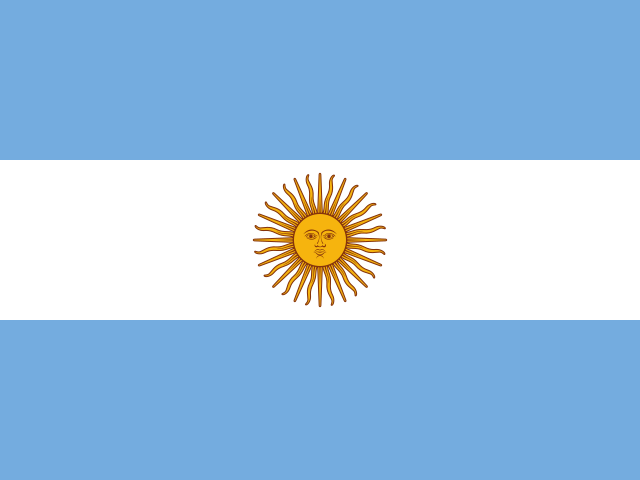 Argentina
 República Dominicana