A person involved in illegal business or shady dealings. Derived from the word for transaction, it is most commonly used in Argentina to describe a street-level drug dealer.
Another cold night in the neighborhood, the transas are lining their pockets.
Any neighborhood grocery store or corner shop run by someone of Chinese descent (Panama's Chinese community has a long history of owning and managing these small retail businesses).
Go to the Chino and buy a pound of potatoes. Do they sell toothpaste at the chinito?
A large, traditional basket woven from vines or plant fibers, designed to be carried on the back. It is used by rural farmers to transport crops and supplies.
Mr. Martin's motete broke right in the middle of the street | We should buy a motete, look how pretty they are
Any neighborhood grocery or convenience store run by someone of Chinese descent. (In Panama, many corner stores are owned by members of the Chinese community, making the term synonymous with the shop itself).
Go to the Chino and buy a pound of potatoes. | Do they sell toothpaste at the Chinito?
Small-time retail or selling items in tiny quantities. (Commonly refers to the practice of breaking down goods into very small, affordable portions for low-income customers).
Even though it is a cuartilleo business, it still makes me a profit.
A shady deal, scam, or corrupt scheme that feels suspicious. (While the word literally means stew, in Venezuela it refers to illicit profit-making or corruption, often involving government contracts or kickbacks).
'I think there is a Guiso going on there' or 'Those people must be guisando.'
A basic, cheap calculator commonly used in corner stores or small businesses (derived from the idea that these devices are only for simple transactions like selling plantains).
Hand me the platanera because this bill is too big.
An informal savings pool common in working-class neighborhoods where participants pay regular installments to a coordinator, who returns the total sum at a scheduled date (this is a community-based alternative to formal banking).
A fixture of Dominican street food culture, this is a skinny, docile stray mutt, usually tan-colored with floppy ears, known for its ability to catch scraps in mid-air and spit out fish bones. (Frituras are informal street stalls that sell fried snacks and serve as local social hubs).
Every fritura has one or two regular Perro de Fritura hanging around.
A former toy store located on El Conde street (a famous pedestrian street in Santo Domingo), well-known for an animatronic Santa Claus displayed in its window every Christmas.
They bought me a toy doctor kit at La Margarita when I was 7 years old.


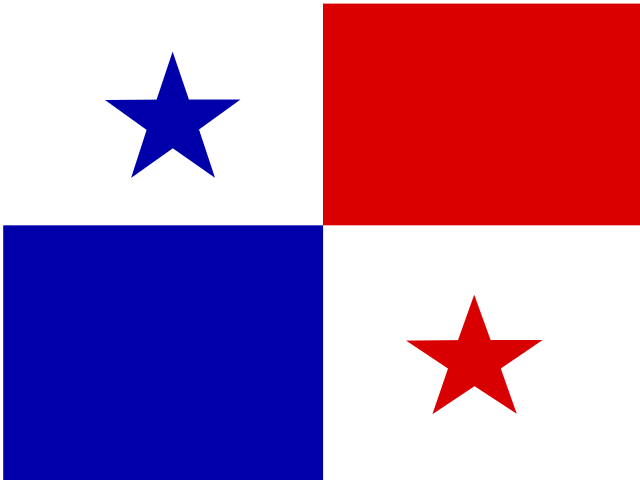 Panamá
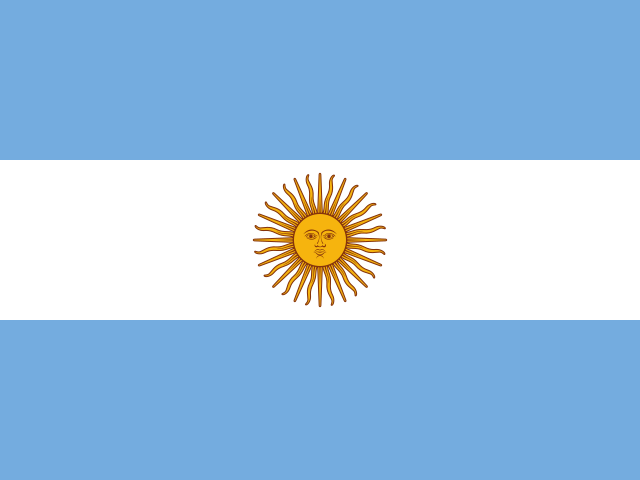 Argentina
 República Dominicana
 Venezuela