Refers to absolute emptiness or the total absence of any element, whether physical or imaginary. It is the state of nonexistence where absolutely nothing is present.
We were driving on the highway and, out of Nada, a deer crossed our path.
Used to emphasize a total lack of something or that a quality is completely nonexistent. It signals that there is zero or not even the slightest trace of whatever is being mentioned.
To be honest I didn't get nada hungry, so I didn't even try a single taco.
A free gift or small extra portion that a seller gives to a customer after a purchase. This courtesy is intended to leave the buyer satisfied, a deeply rooted custom in Venezuelan street markets (this is a variation of the term 'ñapa' used in other regions).
Since I bought quite a few oranges from the man at the stall, he gave me a couple of mandarins for ñada.
A small gift or extra amount that a seller gives to a customer for free, on top of what they paid for. This gesture of courtesy is a common way for local businesses to show appreciation for a purchase. (In Puerto Rico, starchy tubers and root vegetables are known as viandas).
When I bought the root vegetables at the market, the vendor gave me two bananas de nada for being a good customer.
Used to indicate the absolute absence of any object, fact, or element. It is the basic term for describing a void or when there is not a single thing present in a specific situation.
I asked the mechanic what was wrong with my car and he told me he didn't find Nada, that it is running at a hundred (a common expression meaning it is in perfect condition).
Used to express that something expected is not happening or that a desired result has not been reached after several attempts. It is commonly found in the expression nada que, which emphasizes a delay or the fact that something seems unlikely to happen.
Can you believe it is ten o clock already and nada que they open that shop.


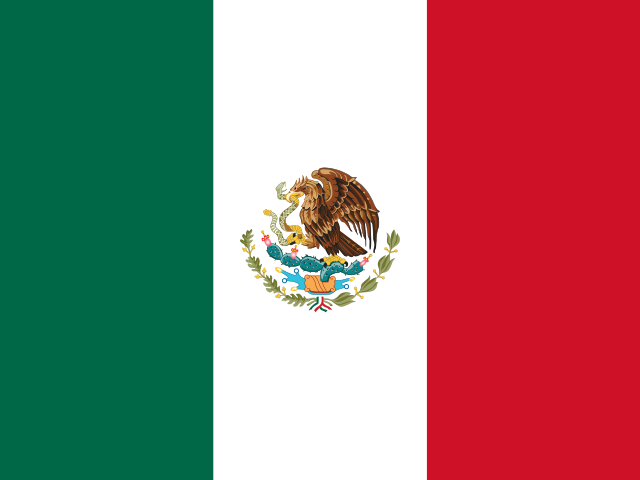 México
 Venezuela
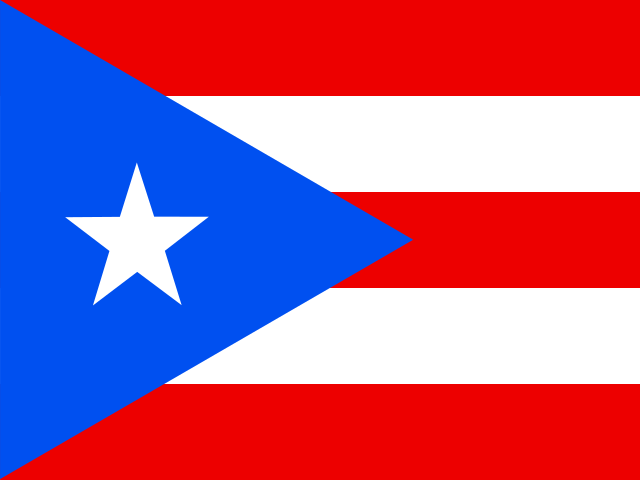 Puerto Rico
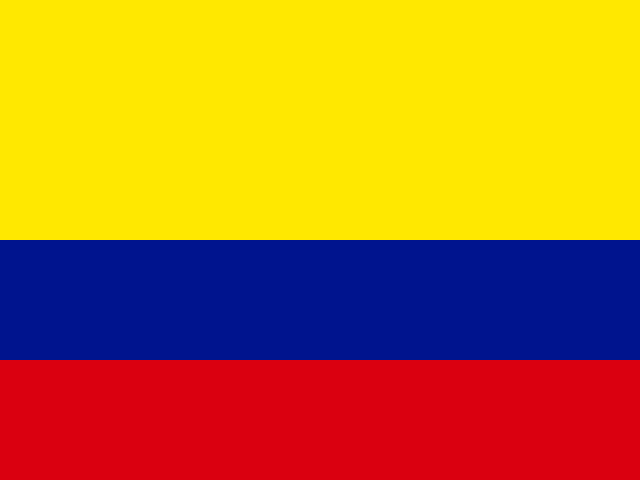 Colombia