A traditional, dense bread pudding typically made from leftover bread, flour, cinnamon, and raisins. (The name literally translates to full mama and is a staple snack in local bakeries).
I have been craving mamallena since last night, but shoot, I am on a diet, sis.
For the cake: 500 grams (approx. 2 cups) of pre-prepared macerated fruit mix, 175 grams (1.5 sticks) of salted butter, 75 grams of baking chocolate (dark 53.7 percent cacao), 1/4 teaspoon of salt, 1 2/3 cups of sugar (a mix of white and brown), 5 eggs, 2 cups of flour (approx. 320 grams), and 1 teaspoon of baking powder (Torta Negra is a traditional dark fruitcake served during the Christmas season in Venezuela).
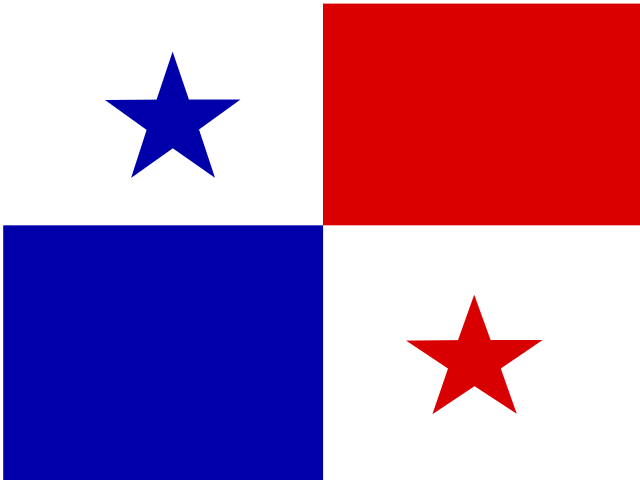
This is the common term for a cake in Panama. While in most Spanish speaking countries dulce refers to candy or general sweets, Panamanians use it specifically for cakes and pastries.
A: I want a chocolate dulce for my birthday. B: Chocolate with or without almonds?
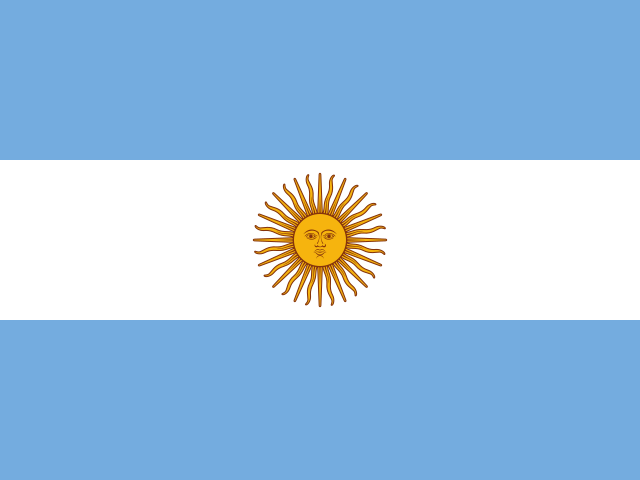
A classic sweet tart from Argentina and Uruguay made with a thin pastry crust filled with quince or sweet potato paste, topped with a lattice pattern of dough strips. (Often eaten during the afternoon snack known as merienda).
An orange-fleshed fruit known as pumpkin or squash in other countries. Also called zapallo in parts of South America, it is used in Venezuela to make soups, arepas, cakes, and traditional sweets.
Honey, buy me some auyama so we can make a soup. / I am going to make a delicious auyama cake.
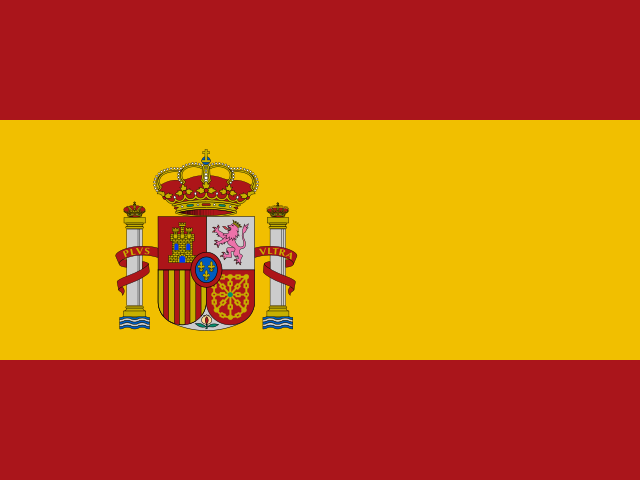
A heavy blow or a hard hit. (In Malaga, the term ironically plays on the Bimbo brand of sliced bread, contrasting the soft bread with a forceful impact).
A slang term for a hard slap or smack to the face. Coined in Murcia (a region in southeast Spain), the word refers to the habit of religious teachers who would scold children by performing two gestures: making the sign of the cross and delivering a slap, both with equal intensity.
He gave him such a Santigüeñazo that he fell to the ground.
An Andalusian term for a slap or smack, one of many Spanish words meaning a blow delivered with an open hand (the Andalusian dialect frequently drops the letter d from the standard word guantada).
An expression from times of economic hardship when bread was expensive and people settled for tortas, a cheaper, unleavened alternative. It is used when you have to accept a lesser or more affordable option because you cannot get what you want. (In Spain, torta is also slang for a slap, a pun used by parents to discourage children from complaining about their meager choices).
I also wanted to buy a better car, but a falta de pan, buenas son tortas.
A flatbread made from cassava root flour, common across the Caribbean. (In the Dominican Republic, cassava is known as yuca and this bread is an ancient indigenous staple). Not to be confused with the Cuban use of the word for a type of saltwater fish.
At every bus station in the capital, they sell garlic cazabe.
A chocolate and cream cake featuring sponge cake heavily soaked in Independencia brand brandy, specifically the version made by Aunt Carmen. The boozier it is, the better it tastes. (Independencia is a brand of Spanish brandy and tita is a colloquial word for aunt).
It is not a tarta borracha, it is not soaked in brandy.
A thick pancake or tortilla made from fresh, ground sweet corn dough with salt and sugar, cooked on a round metal griddle (a budare). In Venezuela, a cachapa is usually served with fresh cheese and fried pork.
A cachapa with queso de mano (a soft, fresh cheese) and fried pork, and a very cold papelon con limon (sugarcane juice with lime) to drink.
A popular fried dough snack in the Dominican Republic, similar to a savory pastry or empanada, typically eaten for breakfast or as a light dinner. (The name is a local adaptation of the English word Johnnycake).
Hey Luis, give me an egg Yaniqueque, hurry up, I am starving!


 Panamá
 Venezuela
 Argentina
 España
 República Dominicana
 El Salvador