The name used for any American, Canadian, or very pale foreigner with a name so strange they can barely pronounce it themselves. Dominicans do not like to struggle with foreign names, so they just say, Hey America, or, Hey Gringo in the floral shirt, come over here. While often mistaken for an insult, it is usually used as a term of endearment, though some people still use it with bad intentions (in Dominican culture, using appearance or origin as a nickname is common and not always negative).
Dominican: What is your name? USA: My name is Mike Wright. Dominican: Say what? Forget it, just tell me what is up Gringo, what is good.
Used to refer to any white foreigner, sometimes as a term of endearment. Local lore traces the name to the phrase Green Go Home, shouted at US soldiers in green uniforms during historical military interventions.
Jose: Look Juan, that gringo looks lost around here. Juan: No man, that is the husband Maria got in New York.
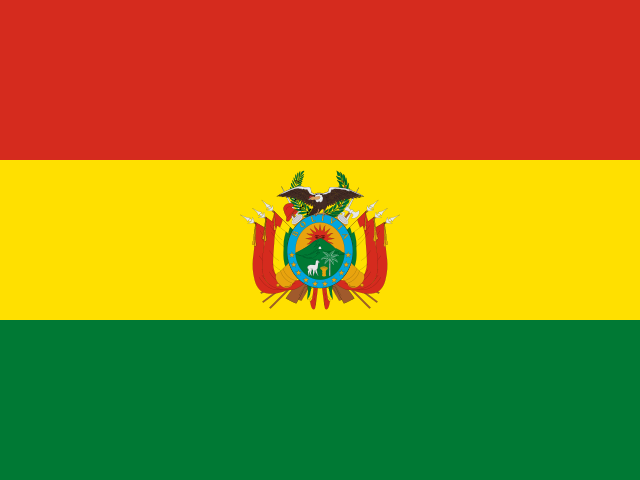
Used for light-skinned foreigners with Caucasian features, usually from Europe or North America. In Bolivia, the term applies to any Western-looking visitor regardless of their specific country of origin.
There were a ton of gringos at the Uyuni Salt Flats taking photos with their giant cameras.
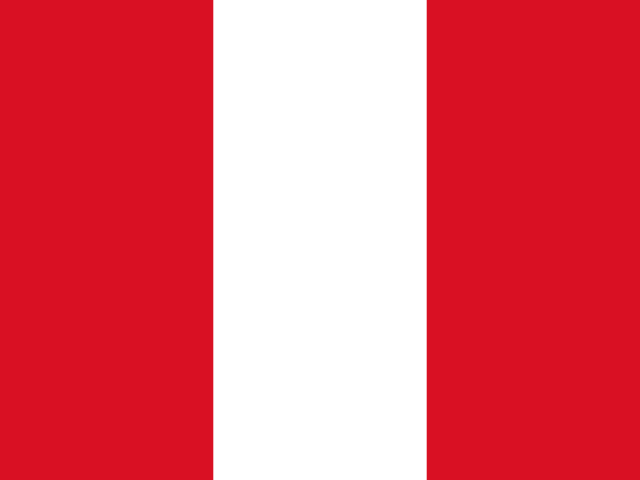
Used to describe someone with blond or light brown hair. It is common as an affectionate nickname or a simple descriptor for a fair-skinned person within a family or social circle, regardless of their nationality.
Even though his parents have black hair, the little guy turned out gringo like his grandfather.
A term used for any light-skinned foreigner with Caucasian features, whether they come from Europe or North America. It is the most common way to refer to white tourists visiting the country (in Colombia, this label is applied to any white-looking foreigner and is not restricted to US citizens).
Yesterday some gringos asked me how to get downtown because they were lost with the map.
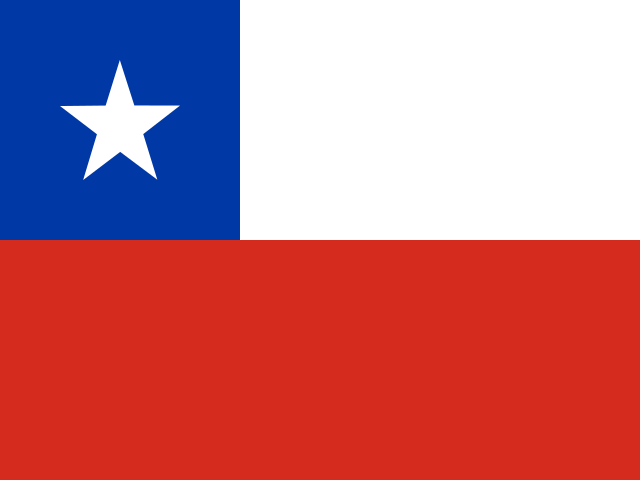
Term for light-skinned foreigners, especially from the U.S., Canada, or Europe. It is applied to any fair-skinned tourist or immigrant regardless of their specific nationality. (In Chile, it is usually a neutral descriptor based on appearance rather than a slur).
Some gringos are staying at the hostel on the corner, they are backpacking all through the south.
Refers to European immigrants, especially of Italian descent, or their descendants who live in rural areas and work in agriculture. It is a common term in the country interior for farm owners or workers (in Argentina, the word is tied to the history of European agricultural settlers rather than referring to Americans).
That gringo bought a new tractor after the excellent wheat harvest he had this year.
Used to describe someone with fair features and blond hair who speaks a language other than Spanish. It is the standard way to identify a person with a foreign appearance, especially if they have very pale skin. (In Mexico, this term is most commonly applied to people from the United States, though it can describe any fair-skinned foreigner).
Yesterday a very tall gringo came to the office who didn't speak any Spanish and had hair that was almost white.
A term used to describe any light-skinned foreigner with Caucasian features, particularly those from the United States, England, or Germany. It is the standard nickname for tourists or residents of Anglo-Saxon or European descent.
Yesterday we ran into a group of gringos at the market who were thrilled to be trying the ceviche.
A term for foreigners, specifically Italian immigrants or native English speakers. It is historically linked to the massive waves of European migration to Argentina (while in most of Latin America it refers to people from the U.S., here it originally identified Europeans who settled in the countryside).
My grandfather was a gringo who came from Italy by boat and started working the land as soon as he reached the pampa.
A term used in Mexico to refer to citizens of the United States. Popular belief holds that the word originated from the phrase green go, shouted at U.S. troops wearing green uniforms during historical invasions of Mexican territory.
Lets take the gringo to eat some good tacos al pastor so he sees what real food is like.
A colloquial term for citizens of the United States. In Colombian slang, it is also used to describe someone who acts like they do not understand or plays dumb to avoid a responsibility.
Don't play gringo, you know perfectly well where you left the car keys!
A person from the United States. The term is said to come from the phrase 'green go home', which Mexicans shouted at American soldiers during the war over a century ago (popularly believed to refer to the color of the soldiers' uniforms).
A term for a North American, specifically linked to the first US military intervention in the Dominican Republic. It is said that locals shouted Green go at the Marines in their green uniforms, meaning Green, go home. (This is a popular folk etymology).
Green go, green go, meaning Gringo, go home, Gringo, go away.
A term used to refer to people from the United States. Popular legend traces the word to the Mexican Revolution of 1910, claiming that because American soldiers wore green uniforms, locals would shout Green go at them, which eventually turned into the current pronunciation.
A term used for people from the United States and, more broadly, for anyone who speaks a non-Spanish European language. It is the standard way to refer to foreigners from northern countries or Europe.
The hostel is full of gringos backpacking all through the south of Chile.
The word Costa Ricans use to refer to anyone born in the United States. It is the standard term in everyday speech to identify Americans, whether they are tourists or residents (Tico is a colloquial nickname for a Costa Rican).
That bar is always full of gringos because they sell the beer ice cold and it is near the beach.
A person from the United States (this term is ubiquitous in Panama due to the historical U.S. presence in the Canal Zone and the use of the U.S. dollar as legal tender).
That gringo is really hot, girl | Panama is full of gringos because we use dollars here too


 República Dominicana
 Bolivia
 Perú
Perú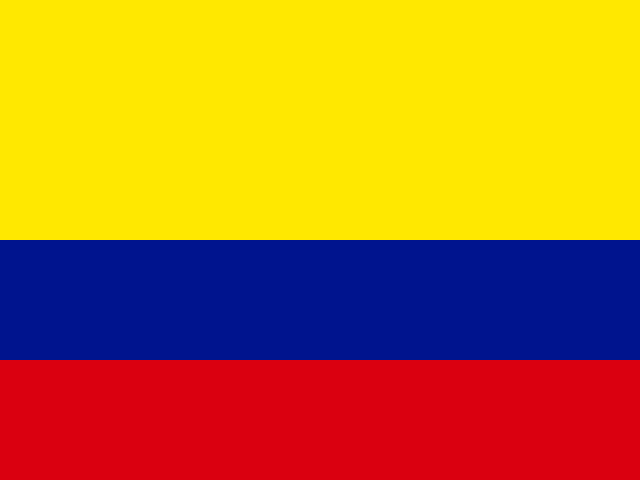 Colombia
 Chile
Chile Argentina
 México
 Global
 Costa Rica
 Venezuela
 Panamá

