Used to describe a person, usually a child, who is extremely rowdy, rebellious, and constantly causing trouble. It characterizes someone who is wild, restless, or always getting into mischief (the term likens rowdy behavior to being untamed or uncivilized).
Your cousins are total indios, they spent the whole afternoon screaming and ended up breaking the baby's toys.
Used to describe someone with physical features characteristic of indigenous or Native American people, usually referring to those with darker skin and strong facial features that show that ancestry. (In Argentina, this look is commonly associated with people from the northern provinces).
The kid working at the kiosk is really indio, he has the face of someone from the north.
A common nickname used to refer to former president Evo Morales. It is typically used disparagingly by his opponents to criticize his actions or persona (Evo Morales was Bolivia's first president of Indigenous descent).
That indio never gets tired of organizing road blockades every time things do not go his way.
A classist slur used to belittle someone perceived as unrefined, crude, or lacking social graces. It is used to establish an imaginary social hierarchy while ignoring the mixed-race roots of the population (in Colombia, the term weaponizes indigenous identity to mock a supposed lack of education or manners).
Don't be such an Indio! Learn how to behave in such a fancy restaurant and stop talking with your mouth full.
A highly offensive and vulgar term for a fan of the Colo-Colo soccer club, used to insult or demean supporters during sports rivalries (Colo-Colo is named after an indigenous Mapuche leader, so the term functions as a racial slur).
Look at how those indios are celebrating after they were gifted that penalty.
A derogatory nickname used in Chile to insult fans of the Colo-Colo soccer club, stereotyping them as uneducated, lower-class, or criminals. It is primarily used by rival fans to attack the social status or behavior of these supporters (the club name and logo refer to an indigenous Mapuche leader).
As soon as the game ended, a group of indios started throwing rocks and trying to mug people who were leaving the stadium.
1. A sucker or a pushover who everyone messes with. 2. A person of brown or mixed-race complexion, used as a polite alternative to the word black. (In the Dominican Republic, this is a standard skin color classification used on official documents.)
1. Keep acting like an idiot, anyone can treat you like an Indio. 2. I am Indio colored with brown eyes and black hair.
A man with cinnamon or tan skin. (In the Dominican Republic, this term is used to describe skin tone on a spectrum of mixed heritage rather than referring to actual indigenous ancestry.)
A derogatory term for someone who behaves in a crude, rude, or unrefined manner. It is typically used by people claiming social superiority to mock others for a perceived lack of class or etiquette. (This term reflects historical classism and racism, equating a lack of manners with being indigenous).
Don't be such an indio and take off your hat when you enter the house, that's just bad manners!
A naive person. It is also a term used for people with dark, mixed, or multiracial skin tones, often used as a polite alternative to the word negro (in the Dominican Republic, this is a common racial classification for people of mixed descent).
She does not look good in that dress, especially because she is indio colored.
A derogatory term for an uncultured, ignorant, or rude person (this usage reflects colonial-era prejudices that equate indigenous identity with a lack of formal education or social refinement).
Don't be Indios. Think carefully about what you are saying, don't be indio.
A term for Indigenous skin color and heritage. The author claims that those who define the word poorly should look in the mirror and ask how many of their own grandparents were proudly born with Indio skin, calling such definitions nonsense and urging a study of diversity (in Peru, the term is often a racial slur, though here it is defended as a common and proud ancestral trait).


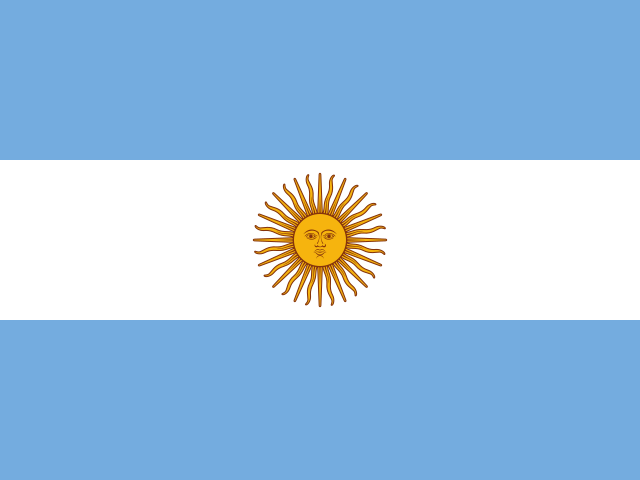 Argentina
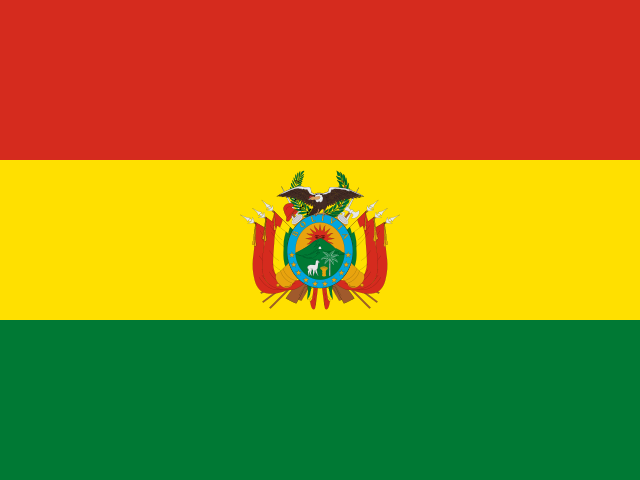 Bolivia
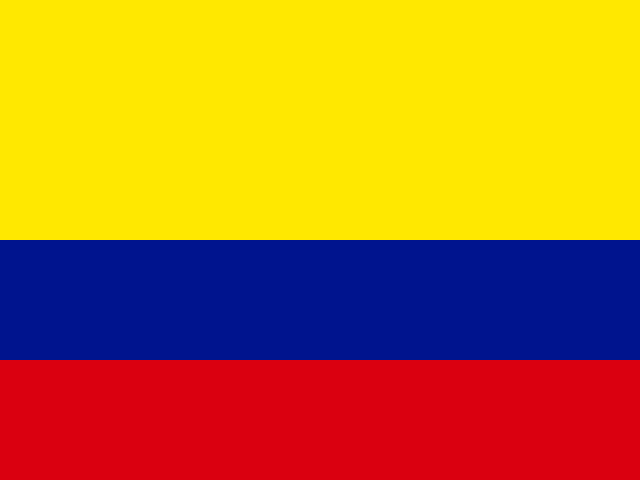 Colombia
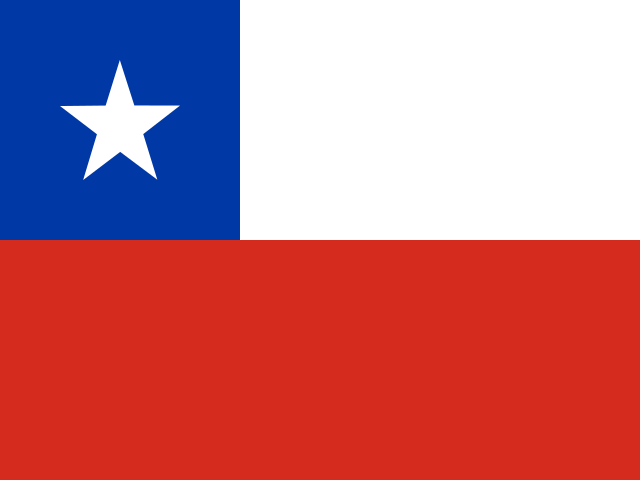 Chile
Chile República Dominicana
 Venezuela
 Perú
Perú