A person from the Greater Antioquia region of Colombia, which includes the modern departments of Antioquia, Caldas, Risaralda, and Quindio. They share a distinct culture, accent, and history centered on trade and mule driving. Nowadays, Paisa is used for anyone who talks or acts like they are from there, regardless of their specific home state. There is a local saying that an Antioquian is born wherever they want, implying that anyone who adopts the culture can be considered one (The region is famous for its entrepreneurial spirit and its very recognizable, sing-song accent).
In the department of Choco, they usually call anyone who is not from there a Paisa, which is explained by the close administrative and transport links that region has with Antioquia.
A person native to the department of Antioquia in Colombia, this term is also used to describe the region itself and its specific culture and customs (this area is centered around the city of Medellin).
The Paisas are very friendly, the Paisa accent is quite unique.
A shortened, affectionate term for a countryman or someone from the rural areas of the Uruguayan interior. It is used to identify people with traditional country customs who usually keep the regional accent (in Uruguay, the interior refers to any area outside the capital).
The paisa who lives in the shack out back promised me that he is bringing some hides for the shed tomorrow.
A colloquial term used in Costa Rica to refer to people of Nicaraguan origin. While common in everyday speech, it often carries a derogatory or discriminatory nuance depending on the speaker's intent (Nicaraguans are the largest immigrant group in Costa Rica, and the term is frequently used in a xenophobic context).
Several paisas who arrived from Managua not long ago are working at that construction site.
A term used by North African street vendors in Spain to address passersby and get their attention. It is usually repeated to attract customers (it is a shortened version of paisano, meaning countryman, used here to create a sense of familiarity).
A common, casual nickname used in Panama for anyone of Colombian nationality, regardless of what city they are from. (In Colombia, this word specifically refers to people from the Medellin or Antioquia region, but in Panama it is applied to all Colombians).
I went to the Paisa's barbershop near my house because that dude gives a great haircut.
Used to describe someone who plays dumb or acts oblivious to avoid a responsibility or an awkward situation. It is the typical behavior of someone feigning ignorance for their own benefit (the term refers to acting like a clueless outsider to dodge obligations).
I asked him to pay me back the money he owes and he immediately acted Paisa to change the subject.
A person of Mexican origin living in the U.S. who maintains a rural or small-town lifestyle. It is often used for hard-working, undocumented people who identify with ranch culture (the rural, cowboy-influenced traditions of Mexico). The term is short for paisano, which means countryman.
I like Paisa music. The Paisa was looking for work as a gardener. Paisas love banda music. Paisas like to wear cowboy hats and boots.
A term for residents of the Colombian departments of Caldas, Risaralda, and Quindio, distinguishing them from those born in Antioquia who are called Antioqueños. (Note: These regions form the Colombian Coffee Axis, and the term is often used broadly for anyone from this entire cultural area).


 Colombia
 Uruguay
 Costa Rica
 España
 Panamá
 Venezuela
 Global
 Estados Unidos
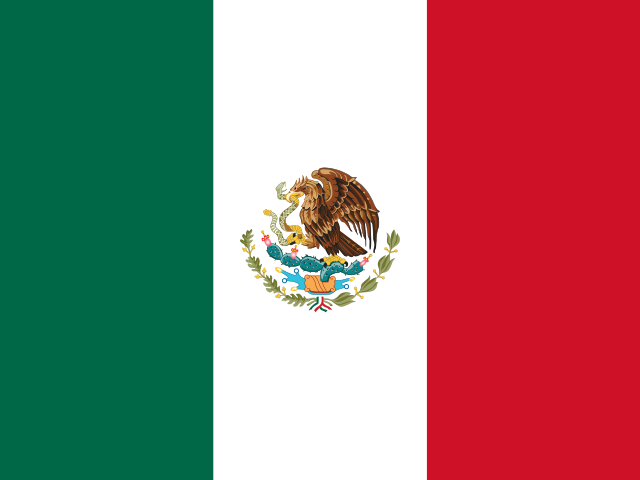 México