To verbally corner someone or trap them in their own story until they are forced to confess a secret or wrongdoing (manzana refers to a city block, implying a tactical surrounding to leave no room for escape).
Come on, spit it out, we already rodeamos la manzana.
To be caught red-handed or in the middle of doing something sneaky, mischievous, or forbidden. (The phrase literally translates to being caught with your hands in the dough while baking.)
You caught me con las manos en la masa. I was just about to eat the cream and chocolate cake.
To grab, hold, or take something. It is also used to describe catching someone red-handed or in the act. (The word vieja is a common, casual way to address a partner or mother).
Honey, pilla what you asked for; they pillaron Pablo kissing his sister-in-law.
In most Latin American countries, Cachar means to catch or nab someone, especially red-handed. It is derived from the English word catch and became popular through baseball (though it is notably used with this same meaning in countries like Argentina where baseball is not a major sport).
They cacharon him taking the money, they cacharon her at a party with another man.
To catch, field, or stop a ball or moving object. (In Chile, while used in sports, it also refers generally to catching something mid-air or stopping a moving vehicle like a bus).
Cachar is an anglicism derived from the English word catch. It means to catch, grab, or snatch, used both for physical objects and for catching or busting someone in the act of doing something.
One day they are going to cachar you taking the newspaper. Juan, you have to learn how to cachar the ball if you want to play baseball (pelota usually refers to baseball in Puerto Rico).


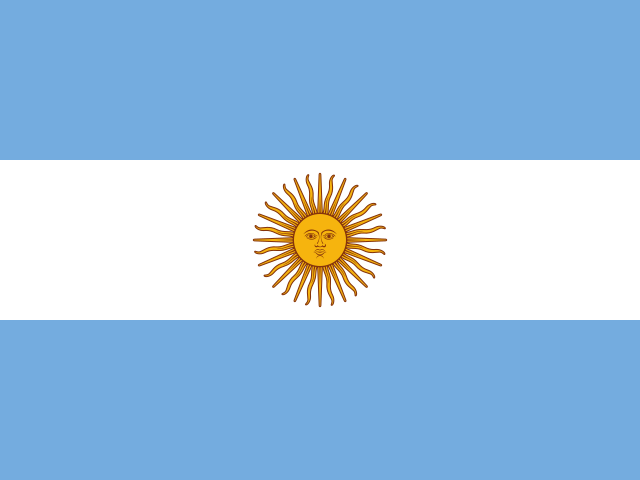 Argentina
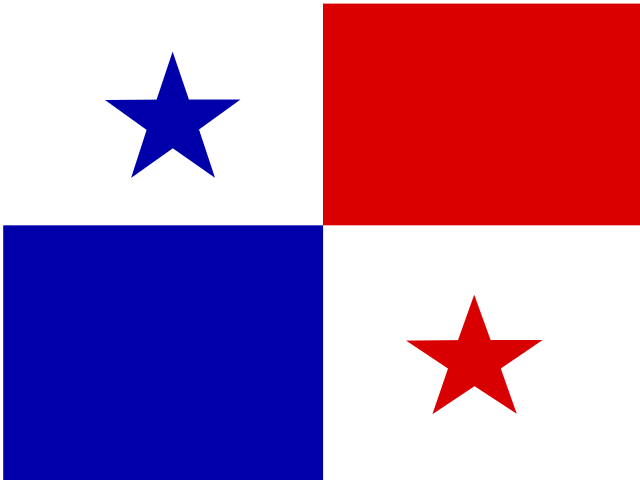 Panamá
 Venezuela
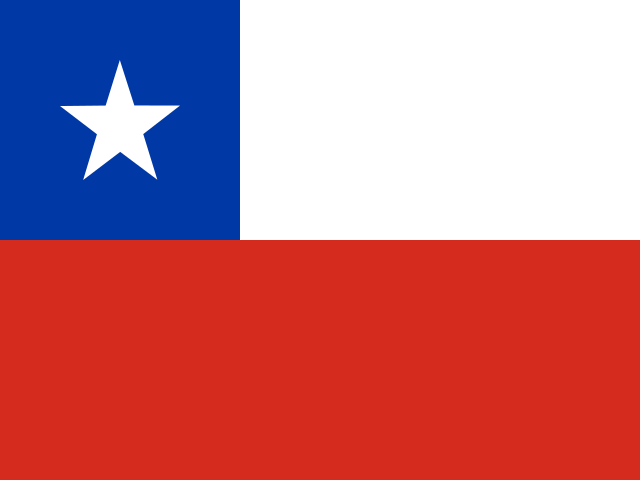 Chile
Chile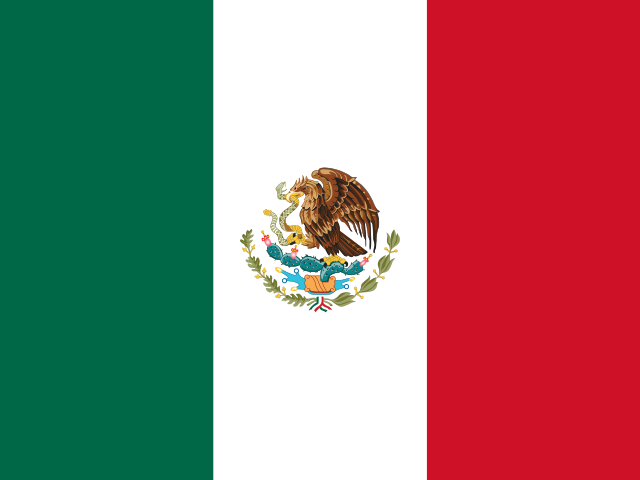 México
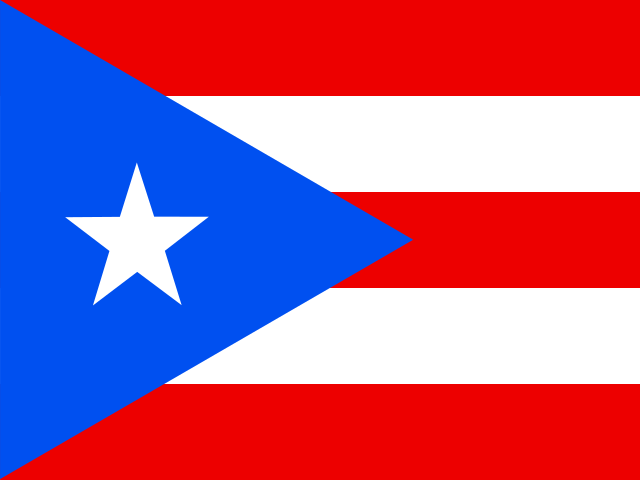 Puerto Rico
 República Dominicana